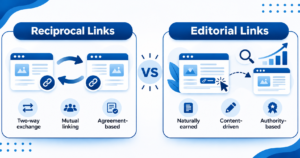
Link Exchange in 2026: Is It Still Safe for SEO?

Link exchange is not automatically bad for SEO. However, excessive reciprocal linking or agreements designed to manipulate search rankings can violate Google’s spam policies. The key is whether links serve readers naturally or exist primarily to influence rankings.
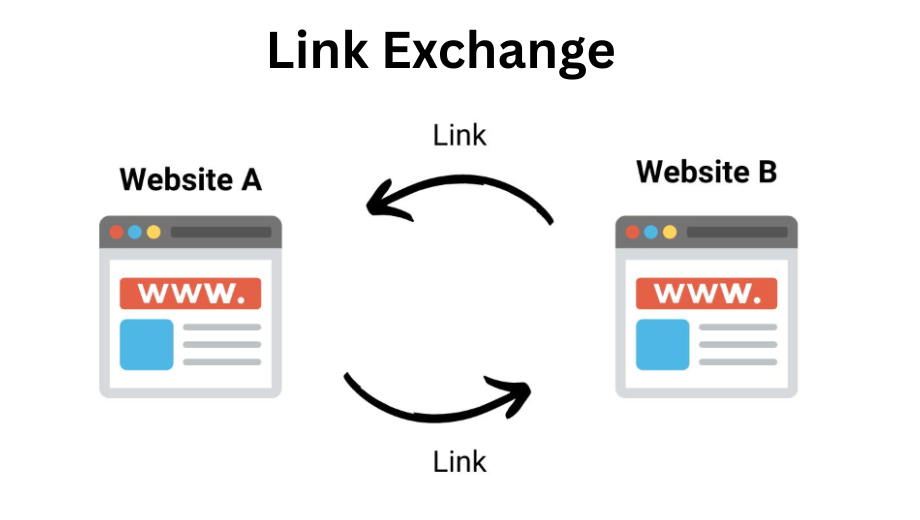
A link exchange is an arrangement in which two websites link to each other, usually to share relevant resources or gain backlinks. For example, a marketing blog might link to a useful SEO tool, and that tool’s website might link back to the blog.
This is also called reciprocal linking. It can happen naturally when businesses, publishers, and industry experts reference each other’s useful content.
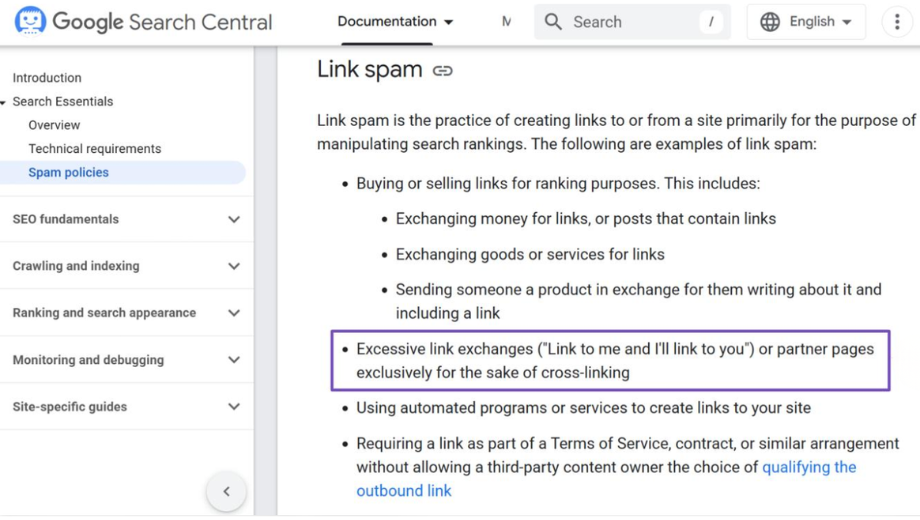
The concern arises when website owners deliberately exchange links to manipulate search rankings rather than help readers. Google identifies excessive link exchanges and partner pages created exclusively for cross-linking as examples of link spam in its spam policies.
Not every reciprocal link is suspicious. What matters is the purpose, scale, and context of the linking arrangement.
Link exchange can be acceptable when links are independently justified by their relevance and usefulness, but systematic exchanges intended to manipulate rankings are risky. Google’s published spam policies remain the primary reference for evaluating these arrangements.
Consider two situations:
Google’s policies focus on manipulative linking patterns, not a blanket prohibition on every link between websites that reference each other.
For SEO professionals, the practical takeaway is simple: evaluate why a link exists, whether it benefits the audience, and whether the arrangement forms part of a broader link-building scheme. No particular exchange frequency or ratio guarantees safety.
A link exchange becomes risky when the arrangement prioritizes ranking manipulation over editorial value. Three common warning signs can help you identify questionable opportunities before they become part of your backlink profile.
Excessive reciprocal linking happens when websites repeatedly exchange backlinks as part of a coordinated strategy to influence rankings. For example, two businesses might agree to link to each other’s articles across dozens of pages, even when those links add little value.
The problem is not a specific number of exchanges. Google does not publish a universal safe limit. Instead, look for patterns such as repeated swaps, reciprocal links placed on unrelated pages, or agreements that make linking back a condition of receiving a backlink. Google specifically identifies excessive link exchanges as link spam.
A backlink should make sense in the context of the page where it appears. An SEO blog linking to a useful keyword research tool is a natural fit. The same blog linking to an unrelated gambling website simply because the owner offered a backlink is harder to justify editorially.
Be cautious when a partner proposes irrelevant placements, generic partner pages created solely for exchanges, or links that interrupt the reader’s experience. Even a website with strong SEO metrics may be a poor partner if its audience and content have little connection to yours.
Some arrangements involve several websites exchanging links through a coordinated network. For instance, Website A links to Website B, Website B links to Website C, and Website C links back to Website A.
The pattern alone does not prove manipulation, but deliberately coordinating such exchanges to pass ranking credit can still violate Google’s policies.
Pay attention to anchor text, too. Repeatedly using commercial phrases such as “best link building services” instead of natural descriptions can signal an attempt to influence rankings.
Evaluate a potential link exchange partner based on relevance, editorial value, audience fit, and the reason for the proposed link. A high domain rating alone does not make a backlink worthwhile.
Before agreeing to an exchange, ask these questions:
You can use a backlink analysis tool to review referring domains, anchor text, and link placement. However, metrics such as domain rating are third-party indicators, not guarantees of link quality or Google’s assessment.
A useful final test is to ask: Would I still link to this page if the other website offered no backlink in return? If the answer is no, reconsider the arrangement.
Three-way link exchanges are not automatically safer than direct reciprocal links. Their acceptability depends on the purpose and structure of the arrangement, not simply on whether the websites link to each other directly.
In a three-way exchange:
This structure may look less obvious than a direct swap, but it does not remove the risk if the websites coordinate links primarily to manipulate rankings.
Focus on editorial justification rather than trying to disguise the exchange pattern.
Better alternatives focus on earning relevant backlinks by giving publishers a genuine reason to reference your website. These methods take effort, but they do not depend on reciprocal agreements.
These approaches work best when the content offers something worth referencing. For a broader view of acquisition methods, explore relevant link building strategies, then choose approaches that fit your resources and audience.
Link exchange in 2026 is not a simple yes-or-no question. Natural reciprocal links can occur without violating Google’s policies, but excessive exchanges designed to manipulate rankings create risk.
Evaluate each opportunity on its relevance, usefulness, and editorial purpose, and prioritize earning links that readers genuinely benefit from.
Link exchange is not inherently bad for SEO. However, excessive reciprocal linking or arrangements designed primarily to manipulate search rankings can violate Google's spam policies.
Yes, Google can take manual action against websites involved in link schemes. Its automated systems may also ignore spammy links or reduce their ranking benefits.
Google does not specify a universally safe number of reciprocal links. Evaluate each link's relevance, purpose, and context instead of relying on a fixed numerical limit.
Three-way link exchanges are not automatically safe. If websites coordinate them primarily to manipulate rankings, changing the linking pattern does not remove the underlying risk.
Reciprocal links may help users discover relevant resources, but exchanging links does not guarantee ranking improvements. Links created primarily to manipulate rankings can violate Google's policies.
Original research, digital PR, useful resources, and relevant editorial contributions can attract backlinks naturally. Prioritize content that publishers genuinely want to reference for their audiences.